

Home / Journal / Overcoming Burnout Without Alcohol for...
BURNOUT WITHOUT ALCOHOLOvercoming Burnout Without Alcohol for Busy Parents
September 19, 2026 · By Editorial Team
Table of Contents
- Signs of Parental Burnout Every Busy Parent Should Recognize
- Why Busy Parents Reach for Alcohol to Cope
- Healthy Stress Relief for Parents: A Step-by-Step Replacement Plan
- The Mental Clarity Timeline After Stopping Drinking
- Everyday Habits That Protect Mental Clarity
- When to Seek Therapeutic Intervention for Parental Burnout
- Frequently Asked Questions
Last Updated: September 19, 2026
Signs of Parental Burnout Every Busy Parent Should Recognize
Parental burnout is a state of physical and emotional depletion caused by long-term parenting stress. It shows up as feeling drained, detached, and ineffective, even when you love your kids. This guide from MODERN SØBER covers how to recover from overcoming burnout without alcohol for busy parents, starting with the signs most people miss.
The tipping point usually isn't one big event.
Emotional Exhaustion and Depersonalization
Emotional exhaustion feels like running on empty no matter how much you rest. You snap over small things. You feel numb when you should feel happy.
When Parental Overwhelm Becomes Chronic Stress
Every parent feels overwhelmed sometimes. Chronic stress is different. It sticks around for weeks or months.
Watch for these signs:
- Waking up tired even after a full night
- Getting sick more often
- Losing patience faster than usual
- Feeling like nothing you do matters
- Pulling away from friends and family
Why Busy Parents Reach for Alcohol to Cope
Alcohol is the most socially accepted way to "take the edge off" after a hard day. That's exactly why it's so easy to lean on.
The Physiological Link Between Stress and Alcohol Cravings
Here's the part most people never hear. Alcohol raises cortisol, your body's main stress hormone, over time. So the drink that feels calming tonight can leave you more anxious tomorrow.
Healthy Stress Relief for Parents: A Step-by-Step Replacement Plan
You don't need to white-knuckle your way through this. You need replacements that actually work, and that means understanding why the wine-down habit is so sticky in the first place.
Why the Evening Drink Feels Necessary (The Cortisol Loop)
Here's the part most parents never hear. Alcohol is a depressant, so it feels calming for the first 20 to 30 minutes. But as your body clears it, cortisol, your main stress hormone, rebounds higher than it was before. That rebound often hits around 2 to 3 a.m., which is why so many parents wake up wired at exactly the wrong time.
BUY BOOK "Nothing Was Broken" →
Step 1: Build a 5-Minute Alcohol-Free Evening Ritual
Your brain expects a reward at the end of the day. Give it one that doesn't cost you tomorrow. The trick is to make the ritual sensory and repeatable, the same cue, in the same spot, at the same time.
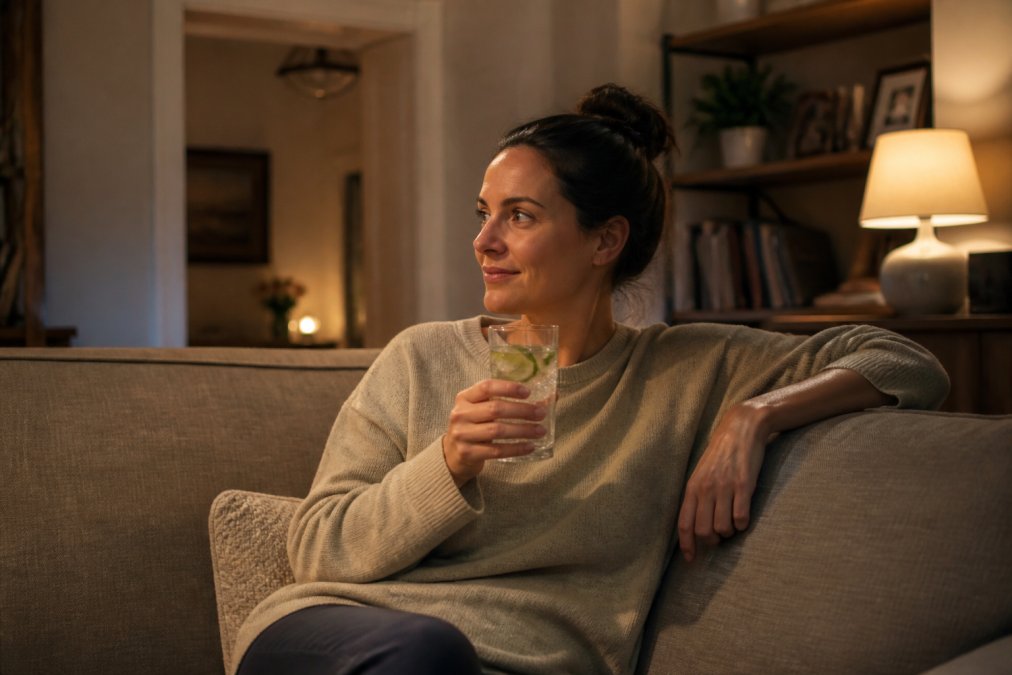
- Minute 1: Fill a real glass, heavy, cold, something that feels like an event, with sparkling water, ice, and a squeeze of lime.
- Minute 2: Step outside or to a window. Ten slow breaths, longer exhale than inhale. This is the single fastest way to nudge your nervous system out of fight-or-flight.
- Minute 3: Change clothes. A specific shirt or pair of pants that means "day is done" works better than you'd think, it's a physical cue, not a metaphor.
- Minute 4: One song you actually love, played loud enough to hear, no phone in hand.
- Minute 5: Say one sentence out loud about how the day went. Naming it closes the loop.
Step 2: Stock Non-Alcoholic Alternatives That Actually Feel Like a Treat
The mocktail world has exploded for a reason. You get the ritual without the cortisol spike. The goal isn't to pretend you're drinking, it's to give your senses a real reward.
Options that hold up:
- Non-alcoholic beer, brands like Athletic Brewing and Best Day Brewing have made this a genuinely good category, not a compromise.
- Non-alcoholic spirits, Seedlip and Ritual make zero-proof bottles you can pour over ice with tonic and a citrus peel.
- Sparkling water with bitters-style flavoring, a few dashes of aromatic bitters (which contain trace alcohol, so skip if you're fully abstinent) over ice with soda water.
- Kombucha in a wine glass, the tartness and carbonation hit the same sensory notes.
- A proper mocktail, try a "No-groni": equal parts non-alcoholic gin, bitter aperitif substitute, and sweet vermouth substitute over a big cube.
Step 3: Use Partner Communication Scripts That Don't Start a Fight
Try one of these:
"I'm cutting back on drinking to sleep better and feel less fried. I'm not asking you to stop. I just need you to know so it doesn't feel weird when I skip the wine."
Step |
What to Do |
Time Needed |
Best For |
|---|---|---|---|
1. Evening ritual |
Swap the drink for a sensory cue |
5 min |
Resetting your wind-down habit |
2. NA alternatives |
Stock mocktails or NA beer |
5 min |
Keeping the treat without the cost |
3. Partner scripts |
Have an honest 2-minute talk |
2 min |
Getting support, not pressure |
The Mental Clarity Timeline After Stopping Drinking
The mental clarity timeline after stopping drinking follows a fairly predictable path. Most people feel worse before they feel better, then notice real gains within a few weeks. Knowing what's coming makes it easier to ride out, and easier to not panic-drink your way back to square one.
Weeks 1-2: Sleep Disruption and Nervous System Recalibration
The first two weeks are the hardest. Your sleep may actually get worse before it gets better. That's normal, and it's not a sign you're doing it wrong.
What to focus on:
- Same bedtime every night, even weekends, within 30 minutes
- No screens for 30 minutes before bed, ideally an hour
- Cool, dark room, 65 to 68°F is the range most sleep researchers point to (The Best Temperature for Sleep)
- No caffeine after early afternoon, its half-life is roughly 5 to 6 hours, so a 3 p.m. coffee is still half-active at 9 p.m.
- Get outside in morning daylight within an hour of waking, this anchors your circadian rhythm faster than anything else
Weeks 3-8: Cognitive-Behavioral Skills and Resilience
This is where the real shift happens. Your sleep stabilizes. Your mood evens out. Your patience comes back. Most parents notice they're less reactive by week four and genuinely more present by week six.
Examples:
- "I need a drink to relax" → "I need ten quiet minutes."
- "I can't get through bedtime without wine" → "Bedtime is hard. Wine doesn't make it easier, it just makes me care less."
- "I deserve this" → "I deserve to feel good tomorrow morning too."
What Most Parents Notice First
The order tends to be consistent. Sleep quality improves first, usually around week two or three. Then mood stability. Then patience with the kids. Mental sharpness, the ability to hold a thought, finish a sentence, remember where you put the keys, often comes last, around weeks six to eight. If you feel foggy at week three, that's on schedule, not a failure.
Everyday Habits That Protect Mental Clarity
Small habits do more than big overhauls. These are the ones that hold up over time.
- Move your body daily, even just a walk
- Eat real food at regular times
- Get outside in daylight
- Keep one honest friendship active
- Practice a two-minute gratitude check at night
- Protect your bedtime like a meeting
When to Seek Therapeutic Intervention for Parental Burnout
Sometimes habits aren't enough. That's not failure. It's information.
Reach out to a professional if you notice:
- Persistent hopelessness or numbness
- Drinking that feels out of control
- Thoughts of harming yourself or your kids
- Symptoms lasting more than a month despite changes
Therapists trained in cognitive-behavioral skills can help you build tools that stick. Support networks and therapeutic intervention are strengths, not last resorts.
Frequently Asked Questions
Do people really use alcohol as a coping mechanism for parental stress?
Yes. Many busy parents pour a drink to mark the end of the workday or to soften the transition from job pressure to family demands. The problem is that alcohol raises cortisol and disrupts sleep, so the relief is short and the stress rebounds. Replacing that ritual with an alcohol-free evening routine, like sparkling water in a nice glass or a short walk, gives your nervous system a real reset without the next-day cost.
What are the early warning signs of parental burnout?
Early signs include emotional exhaustion that sleep does not fix, feeling detached or numb toward your kids, dreading the morning routine, and losing confidence in your parenting. You may also notice irritability, headaches, and a shrinking interest in things you used to enjoy. Catching these signs early matters because chronic stress at this stage is much easier to reverse with small habit changes than after months of ignoring it.
How long does it take to feel mental clarity after stopping drinking?
Most people notice better sleep and steadier moods within the first two weeks. By weeks three to eight, many report sharper focus, less anxiety, and stronger emotional regulation as their nervous system settles. Full mental clarity after stopping drinking varies by person, but parents who pair sobriety with sleep hygiene, movement, and stress management habits tend to see the fastest and most durable changes.
What are healthy, non-alcoholic alternatives for evening relaxation?
Try a mocktail made with sparkling water, fresh citrus, and herbs, or a chilled herbal tea like chamomile or ashwagandha. Some parents prefer a zero-proof beer or wine substitute served in a wine glass to keep the ritual feel. Pair the drink with a wind-down activity such as reading, stretching, or journaling so the alcohol-free evening routine becomes a genuine signal to your body that the day is done.