

Home / Journal / Why Quit Alcohol If Not...
BENEFITS OF TAKING A BREAK FROM ALCOHOLWhy Quit Alcohol If Not Addicted: 7 Benefits of a Break
October 14, 2026 · By Editorial Team
Table of Contents
- Why Quit Alcohol If You're Not Addicted?
- The Benefits of Taking a Break From Alcohol
- What Happens When You Stop Drinking Alcohol: A Week-by-Week Look
- Abstinence, Moderation, or a 30-Day Break: Which Fits You?
- How to Take a Break From Drinking Without Overhauling Your Life
- How to Say No to Alcohol Without the Third Degree
- Is It Safe to Stop Drinking Suddenly?
- Conclusion: Clarity Is a Choice, Not a Crisis
- Frequently Asked Questions
Last Updated: October 14, 2026
Why Quit Alcohol If You're Not Addicted?
Most people who question their drinking don't have a dramatic story. They have a quiet one: a glass of wine that became two, a morning that started slower than it should, a Tuesday that felt like a Friday. At Modern SØber, we hear from professionals, parents, and high performers who want to quit alcohol, not because they've hit a bottom, but because they want their edge back.
You don't need a diagnosis to make a change. A break from drinking is a legitimate, evidence-informed choice for anyone who wants better sleep, steadier energy, and a clearer head. This guide covers the benefits of taking a break from alcohol, what happens when you stop drinking alcohol week by week, and how to do it without turning your social life upside down.
Alcohol use disorder is a clinical diagnosis defined by patterns of impaired control, continued use despite harm, and physiological dependence. Not meeting that criteria doesn't mean your drinking habits are neutral. It means you get to choose your relationship with alcohol on your own terms.
The Benefits of Taking a Break From Alcohol
The benefits of taking a break from alcohol show up faster than most people expect, often within the first two weeks. Sleep deepens, mornings stop feeling like a negotiation, and the low-grade fog that seemed normal starts to lift.
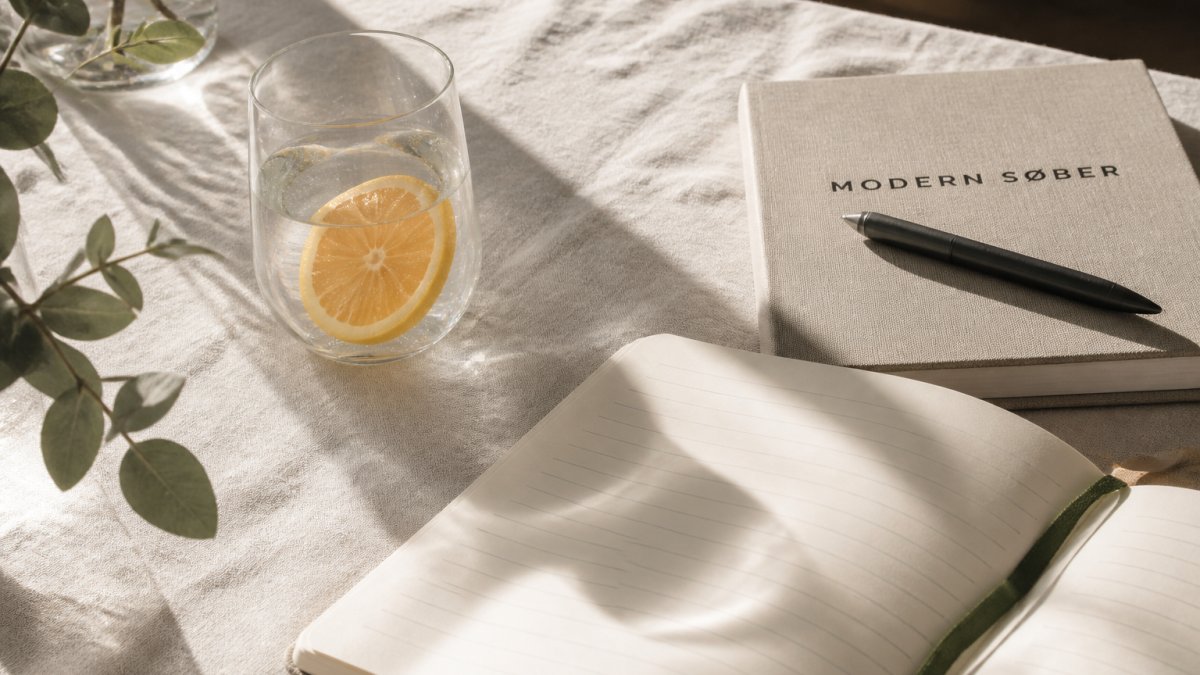
Here's what tends to change first.
Better Sleep and Steadier Energy
Alcohol is a sedative, not a sleep aid. It shortens the time it takes to fall asleep, then fragments the second half of the night, suppressing REM sleep and disrupting the sleep cycle. Many people who drink regularly wake at 3 a.m. without connecting it to the glass of wine at dinner.
Cut alcohol and the pattern reverses. Sleep quality improves, energy levels stabilize through the afternoon, and the caffeine you needed to compensate becomes optional.
Sharper Focus, Mood, and Relationships
Alcohol is a depressant that borrows against tomorrow's mood. Cutting back often brings steadier baseline mood, better cognitive function, and more patience in conversations that used to test it.
The relationship effects are quieter but real. Being fully present at dinner, remembering the details, and showing up without a chemical buffer changes how people experience you.
What Happens When You Stop Drinking Alcohol: A Week-by-Week Look
What happens when you stop drinking alcohol follows a fairly predictable arc for most moderate drinkers.
Timeframe |
What Most People Notice |
What's Happening |
What Helps |
|---|---|---|---|
Days 1-3 |
Restlessness, sugar cravings, disrupted sleep, irritability |
Alcohol's sedative effect is clearing; the brain's calming GABA signaling is recalibrating while glutamate rebounds |
Hydration, protein at breakfast, an earlier bedtime, a walk after dinner |
Week 1 |
Sleep starts to consolidate, mornings feel lighter, cravings peak then ease |
REM sleep begins to normalize; blood sugar stabilizes as empty calories drop out |
Consistent wake time, sunlight within an hour of waking, a replacement evening ritual |
Weeks 2-3 |
Energy steadies, mood evens out, skin looks clearer, workouts feel easier |
Hydration and sleep debt recover; inflammation markers tend to decline |
Movement most days, social plans that don't center on bars, a two-line nightly journal |
Week 4 |
Sharper focus, less anxiety, better workouts, noticeable weight change for some |
Cognitive and mood benefits compound; the habit loop weakens with each repetition |
Reflection, a defined plan for day 31, one accountability person |
Beyond |
Compounding gains in health, weight, presence, and relationships |
New baseline becomes the default rather than the exception |
Long-term structure, community, and periodic check-ins |
A few things worth knowing before you start.
What counts as a drink. A standard drink in the U.S. is 12 ounces of regular beer at about 5% alcohol, 5 ounces of wine at about 12%, or 1.5 ounces of distilled spirits at about 40% (What Is A Standard Drink?).
Track before you quit. For seven days, note what you drank, when, who you were with, and how you felt an hour later.
A quick self-check. The World Health Organization's AUDIT screening tool and the NIAAA's drinking-patterns guidance are both free and widely used.
Sleep is the first domino. Most of the early benefits trace back to sleep architecture. Alcohol shortens the time it takes to fall asleep, then fragments the second half of the night and suppresses REM (Alcohol and the Sleeping Brain).
If you've been drinking heavily or daily, withdrawal symptoms can be more serious than a restless night. More on that below.
Abstinence, Moderation, or a 30-Day Break: Which Fits You?
There's no single right answer, and the honest one depends on your drinking patterns and your goal. Abstinence suits people who find moderation exhausting or who want a clean break. Moderation suits those who want alcohol to remain a small, occasional part of life. A 30-day break is the middle path: long enough to reset habits, short enough to feel doable.
Here's how to think about it.
- Choose abstinence if you've tried to cut back repeatedly and it keeps creeping up, or if you want the full benefit of an alcohol-free baseline.
- Choose moderation if drinking is genuinely occasional and you have clear rules you actually keep.
- Choose a 30-day break if you're sober-curious, want to test the benefits, and want data on how you feel without alcohol.
How to Take a Break From Drinking Without Overhauling Your Life
Learning how to take a break from drinking doesn't require a new identity or a dramatic announcement. It requires small structural changes that make the default easier to keep.
- Pick a start date and a length. Thirty days is the standard for a reason. Write it down.
- Clear the house. You don't need willpower at 9 p.m. if there's nothing in the fridge.
- Replace the ritual, not just the drink. Sparkling water in a wine glass, a fancy NA beer, or a mug of tea keeps the habit loop intact.
- Protect your sleep window. Most of the early benefits come from better rest.
- Track how you feel. A two-line journal entry each night gives you evidence when motivation dips.
- Tell one person. Not everyone. One.
For readers who want a physical reminder of the choice, the Modern Sober Apparel collection includes pieces like The Clarity Tee and The Presence Crewneck. They're quiet signals, not slogans, and plenty of people wear them as a daily anchor for the decision they've already made.

How to Say No to Alcohol Without the Third Degree
Knowing how to say no to alcohol is a social skill, and like any skill it improves with a script. The goal is to decline without inviting a debate.
- Keep it boring. "I'm taking a break" ends most conversations. No reason required.
- Hold a drink. A sparkling water with lime removes the "you're not drinking?" question entirely.
- Redirect fast. Ask about them. Most people would rather talk about themselves than interrogate your glass.
- Have an exit line. "I've got an early morning" works every time.
- Skip the apology. You're not doing anything wrong, and the tone you use sets the tone they take.
Is It Safe to Stop Drinking Suddenly?
For most moderate drinkers, stopping suddenly is safe and the discomfort is mild: restlessness, irritability, sugar cravings, and a few rough nights of sleep. That's the common experience, and it usually fades within a week.
But there's a gap between how people describe their drinking and what their body has adapted to. Physical dependence can develop without anyone identifying as addicted, and it can develop faster than most people expect.
Warning signs to take seriously. Mild withdrawal looks like anxiety, shakiness, sweating, nausea, a racing heart, and trouble sleeping. Symptoms that escalate, confusion, hallucinations, a seizure, or a severe jump in heart rate and blood pressure, are a medical emergency.
What safer tapering can look like. If you're drinking daily and want to stop, a physician can help you taper gradually, sometimes with medication to stabilize withdrawal. This isn't a sign of weakness or a step into a recovery identity.
A note on the middle path. Many people who don't meet criteria for alcohol use disorder still find that a supervised break is the cleanest way to reset.
If you've ever had a seizure, been hospitalized for withdrawal, or drink daily, do not stop cold turkey without medical guidance. The risk is small in absolute terms but real, and it is not worth testing alone. ::: Establishing a structured approach remains the most reliable way to manage the initial transition when staying sober alone.
Conclusion: Clarity Is a Choice, Not a Crisis
You don't need a rock bottom, a diagnosis, or a story worth telling. You need a reason, and "I want to feel better" is a complete one. The benefits of taking a break from alcohol, better sleep, steadier mood, sharper focus, and more presence in the moments that matter, are available to anyone willing to test them.
If you're ready to explore what an alcohol-free stretch could do for you, start with the lifestyle collection. Clarity is a luxury, and it's one you can choose on a Tuesday.
Frequently Asked Questions
Why should I quit drinking if I'm not addicted?
Because the reasons to quit alcohol don't require a diagnosis. You might want steadier sleep, more focus at work, or fewer 3 a.m. wake-ups. You might be tired of planning weekends around drinking or of feeling foggy on Monday. Many people who question their drinking don't meet criteria for alcohol use disorder. They simply notice that alcohol costs more energy than it gives back. Changing your drinking habits is a valid choice at any level of consumption, and you don't need to label yourself to make it.
Can you benefit from quitting alcohol even if you only drink socially?
Social drinkers often notice changes quickly because there's less to mask the effects. Sleep quality usually improves, since alcohol fragments REM sleep even in small amounts. Many people report steadier mood, clearer mornings, and more energy within the first two weeks of a break. You may also save money and cut calories without trying. The benefits of taking a break from alcohol scale with how much you drink, but they rarely require heavy drinking to show up.
How long should I take a break from alcohol to notice a difference?
Most people notice sleep and energy shifts within the first one to two weeks. Mental clarity, mood stability, and easier mornings tend to build over three to four weeks, which is why 30 days is a common benchmark. A month is long enough to break the automatic habit loop, reset your baseline, and see how you feel without alcohol in the picture. After that, you can decide whether to continue, return to drinking, or land somewhere in between.
Is it safe to stop drinking alcohol suddenly?
For most light and moderate drinkers, stopping suddenly is not dangerous. But if you drink heavily and daily, or have experienced withdrawal symptoms like shaking, sweating, or a racing heart when you've gone without alcohol, sudden stops can be risky. Withdrawal can escalate quickly in those cases. Talk to a doctor before you quit, and ask about a supervised plan. This isn't a reason to avoid change; it's a reason to make the change with the right support behind you.
The hardest part isn't the first week. It's deciding that a change is allowed without a crisis to justify it. Modern SØber exists for that decision: premium apparel, resources, and a community built around clarity over numbness. Explore the collection and the Journal at ModernSober.com, and start with the version of the choice that fits your life. Clarity. Strength. Forward.